
The Trada Siblings’ Estrangement
The Lying Life of AdultsThis thread traces how the old struggle between Andrea Trada and Vittoria Trada reaches Giovanna Trada and becomes a contest over family loyalty, memory, and belonging.
increasing Bearing strength in each event
 decreasing
Bearing strength in each eventdecreasingA Family Kept Apart

A Family Kept Apart
An inherited silence
Andrea Trada has made a life in Naples that appears almost detached from his relatives. His daughter Giovanna Trada knows her mother’s family and their home in Museo, but her father’s relations occupy an indistinct world far below the familiar streets of Vomero and Rione Alto. Visits are rare and weighed down by her parents’ anxiety.
The family’s careful silences make Vittoria Trada seem less like a relative than a threat. Andrea speaks of his sister as envious and destructive, while Nella avoids the subject. Giovanna grows up with the sense that old injuries exist but without a reliable account of what caused them.
Estrangement as a family rule
The distance is maintained through practical habits as much as explicit hostility: formal visits, strained greetings, and a shared effort to forget each encounter afterward. Giovanna is taught to treat this separation as protection, though nobody explains what danger the relatives pose.
That silence leaves room for the inherited feud to shape Giovanna before she can judge it. When Andrea later compares her emerging face to Vittoria’s, the family’s division becomes personal: resemblance threatens to turn a hidden conflict into a question about who Giovanna is becoming.
The Sister’s Accusation

The Sister’s Accusation
A rival account
After Giovanna overhears Andrea compare her to Vittoria, she insists on meeting the aunt whose name has functioned as a family warning. At Vittoria’s home, she finds a forceful woman who welcomes her without the polished manners of her parents’ circle and immediately challenges their version of family life.
Vittoria describes Andrea as controlling and self-regarding. She claims he denied her a chance to dance, erased people who mattered to her, and helped destroy her relationship with Enzo. Her account does not simply deny Andrea’s accusations; it gives the same family history an opposing moral shape.
The conflict enters the next generation
The dispute becomes intimate when Vittoria tells Giovanna that her father’s family has been kept from her. She offers kinship as a counterweight to the isolation Giovanna has felt, and calls the girl by the affectionate name Giannina. The invitation makes Vittoria’s story emotionally powerful even while its truth remains uncertain.
Giovanna leaves with no settled judgment about which sibling is right. Instead, she carries both accounts, and her parents’ warning that Vittoria will turn her against them begins to sound like a prediction that the visit itself has fulfilled.
The Heirloom Dispute
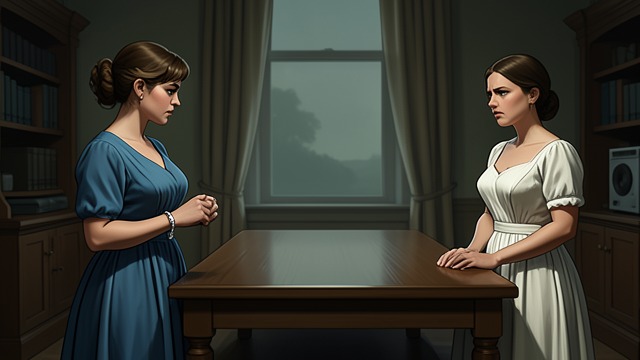
The Heirloom Dispute
A bracelet with competing histories
A bracelet becomes the material center of the siblings’ conflict. Vittoria tells Giovanna that she gave it to her at birth, while Andrea says nothing about such a gift and later explains that he took the jewelry from Vittoria after their mother’s death. The family cannot agree on whether the object was a gift, an inheritance, or a disputed possession.
The bracelet moves through several hands. Costanza returns it to Giovanna after her marriage to Andrea is exposed, and Giovanna wears it as proof that the adults’ relationships and loyalties are tangled together. Andrea demands that she give it up; Costanza insists it is hers to keep.
Ownership as a loyalty test
Vittoria asks for the bracelet back, but her anger makes clear that its importance exceeds its monetary or decorative value. For her, it carries the history of her mother, her brother, and the emotional claim she believes she has on Giovanna. Costanza’s attachment and Andrea’s possessiveness add further meanings that no single explanation can resolve.
Giovanna refuses to treat the object as belonging unequivocally to any one adult. Her resistance briefly makes her a participant rather than a messenger in the family dispute. Yet the bracelet continues to circulate, ending up on Giuliana’s wrist, where its transfer renews questions about who is entitled to claim it and what affection its possession represents.
The Parents’ Betrayals
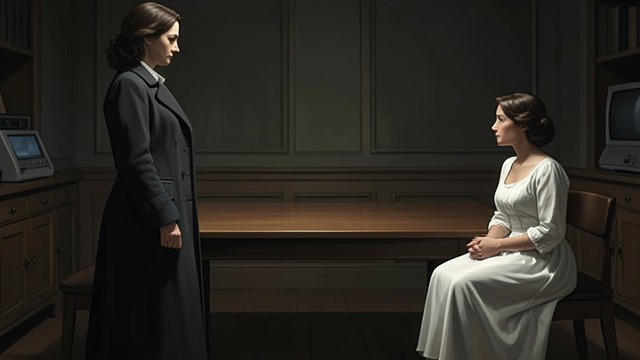
The Parents’ Betrayals
A private suspicion becomes public rupture
Giovanna sees Mariano touch Nella’s ankle beneath the dinner table and cannot decide whether the gesture is playful or intimate. She tells Vittoria, who responds with contemptuous indifference toward the possibility that Andrea might care. The disclosure turns Giovanna’s private unease into a potential weapon in the older generation’s conflicts.
Soon afterward, Andrea and Mariano have a violent confrontation at Costanza’s home. Their argument spills beyond their old political and intellectual debates, and the adults’ shouting and fractured friendships suggest that sexual betrayals, rather than abstract ideas, have destabilized the group.
Two households break apart
At lunch, Nella reveals that Andrea has had another wife for fifteen years. Giovanna already suspects that the bracelet and the adults’ silences connect to a hidden relationship, but the revelation makes the family’s divided loyalties explicit. Her attempt to make sense of the adults’ behavior cannot restore their former domestic order.
Andrea and Nella take nearly two years to separate formally, but they live together only intermittently as the marriage unravels. Andrea later makes a home with Costanza, while Nella remains emotionally fixed on him. The breakdown leaves Giovanna caught between parents whose affection for her persists even as their marriage no longer can.
Giovanna’s Divided Allegiance
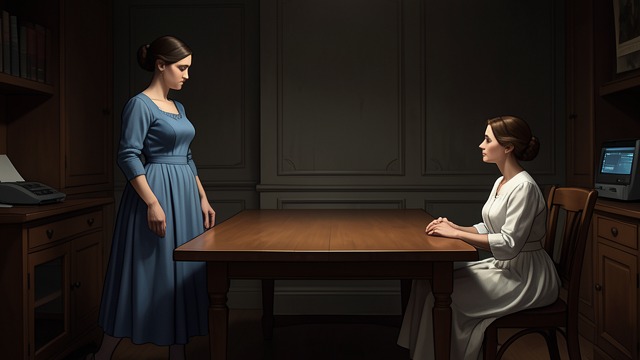
Giovanna’s Divided Allegiance
A confidante between hostile worlds
Vittoria’s attention gives Giovanna a new sense of belonging, but it also pressures her to judge her parents through the aunt’s grievances. Giovanna visits paternal relatives, hears Vittoria’s stories about Enzo and Andrea, and gradually conceals more from home. She learns to tell partial truths, preserving both her attachment to her parents and her access to the family world they had excluded.
The arrangement becomes unstable when Giovanna confides that she saw Nella and Mariano together. Vittoria does not offer the reassurance or discretion Giovanna seeks, and the girl is left afraid that she has handed her aunt information that could injure her father and mother. Her divided allegiance has become an active source of danger rather than a private uncertainty.
Choosing without reconciliation
As Andrea and Nella’s separation progresses, both parents tell Giovanna to stop seeing Vittoria. Giovanna initially agrees, exhausted by her aunt’s demands, but later returns to Vittoria and becomes entangled again in her household and its conflicts. At the same time, she reconnects with Angela and Ida and begins to see that no single family circle can provide a complete account of the adults around her.
By the later encounters, Giovanna can care for Vittoria without accepting every demand, and can care about her parents without trusting their idealized self-image. Her loyalties remain unsettled rather than reconciled. The movement is from obedient innocence toward an uncomfortable independence in which she recognizes that affection does not require adopting one adult’s version of the feud.
Before Giovanna’s adolescence
Giovanna’s first visit to Vittoria
After Andrea and Nella’s separation begins
From the affair’s exposure to the first separation
From the first secret visits through the later family reunions
